
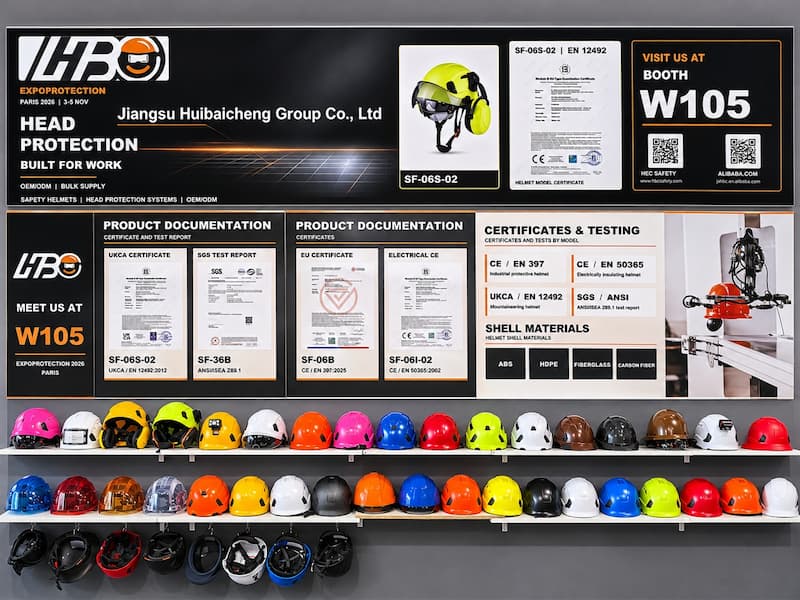
At Expoprotection 2026, the most useful conversations at HBC Booth W105 rarely stopped at “How much is this helmet?” Buyers picked up samples, checked accessories and asked which compliance documents applied to the exact model in their hands.
The same three questions came up repeatedly: Does this model have the required certification? What are the MOQ and price? Can the logo and packaging be customized?
Those questions may sound simple, but each one affects the final specification. This recap shares what buyers examined in Paris, which products drew the most interest and what information helps HBC prepare a meaningful quotation instead of a price that cannot be compared fairly.
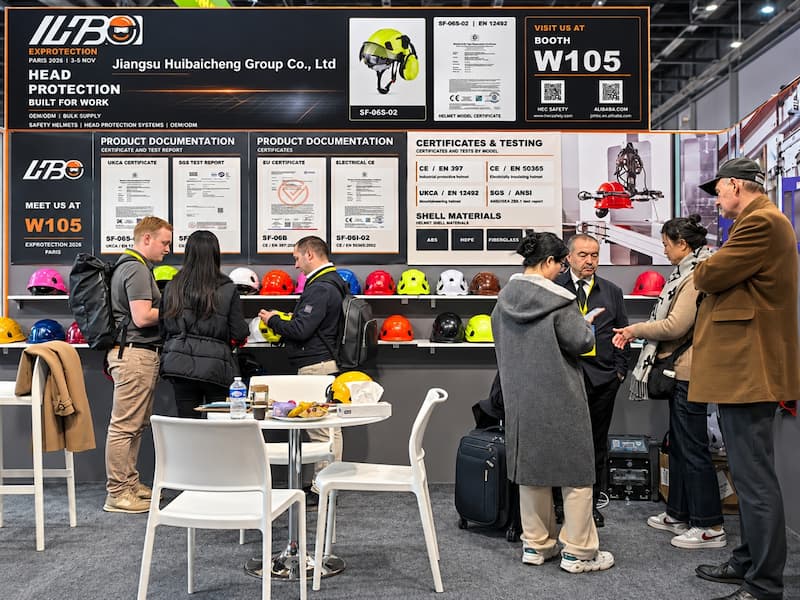
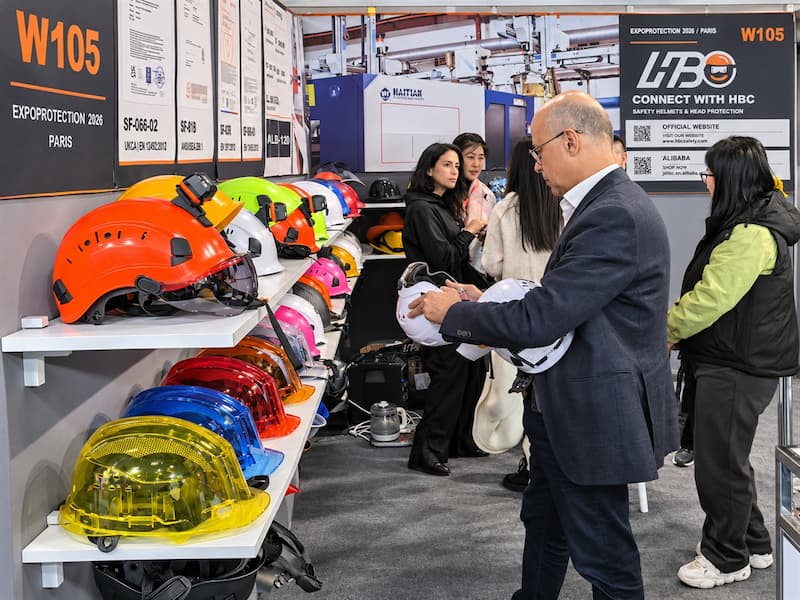
Visitors reviewed helmet models, accessories and product documents at HBC Booth W105.
Expoprotection 2026 at a Glance
Expoprotection 2026 took place from November 3 to 5 at Paris Expo Porte de Versailles, Pavilion 1. HBC met PPE distributors, importers, contractors, project purchasers and private-label buyers at Booth W105.
Our pre-show guide introduced the planned helmet and accessory display. At the event, visitors could compare physical products with specifications, certification materials and accessory options in one conversation.
The strongest interest centered on four models: SF-06B, SF-06I, SF-10B-04 and SF-71. The first three have model-matched EN 397:2025 documentation confirmed by HBC. SF-71 is an EN 812:2012 industrial bump cap and must not be presented as a substitute for an EN 397 safety helmet.
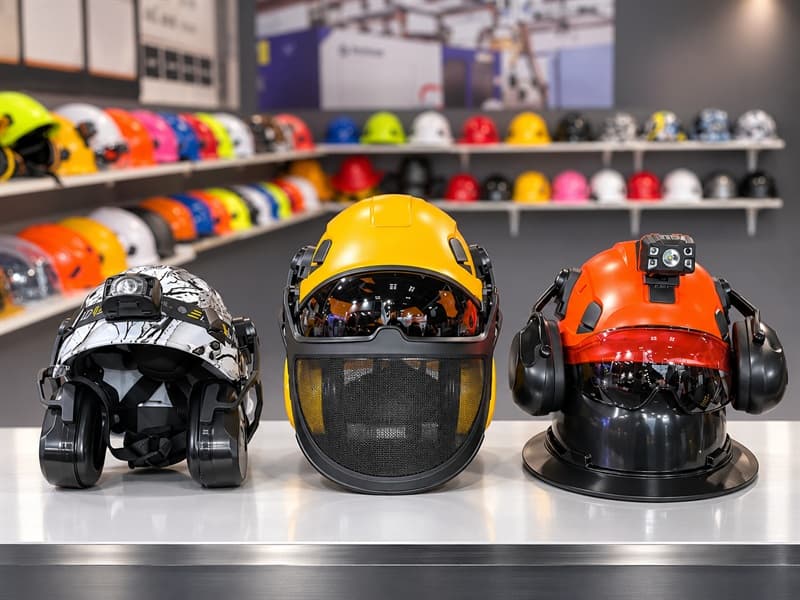
The booth display allowed buyers to compare different helmet formats, materials, colors and accessory configurations.
What Buyers Examined at Booth W105
A catalogue can introduce a product, but a trade show lets a buyer handle it. Visitors adjusted suspension systems, looked inside shells, checked chin straps and considered how visors, earmuffs and lights would connect to selected helmet platforms.
They also compared the physical model with the supporting paperwork. The key question was not whether HBC could show a certificate somewhere in the range. It was whether the model number, tested configuration and applicable standard matched the product being considered.
This distinction matters when two helmets look similar but use different shells, suspensions, vents or accessories. Certification and test evidence must be checked at model level rather than inferred from appearance.
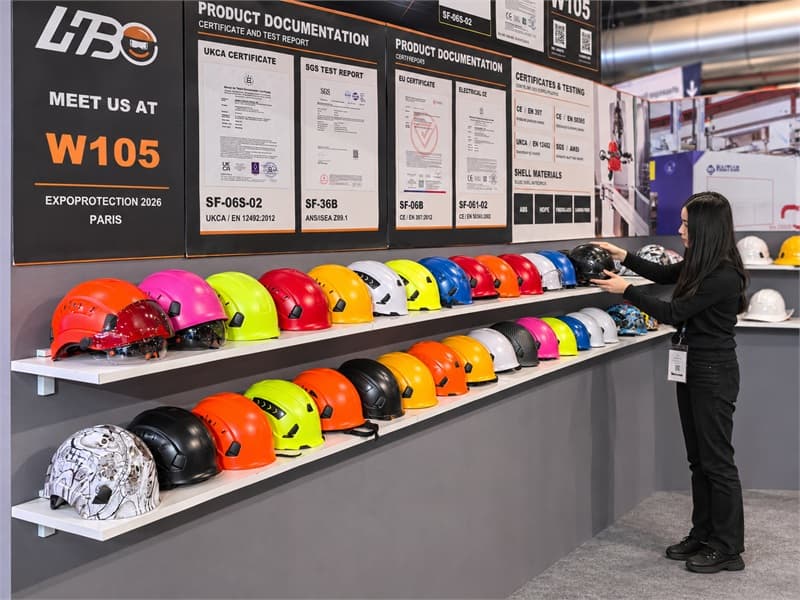
Product documents were displayed alongside helmet models so visitors could ask configuration-specific questions.
The Three Questions Buyers Asked Most Often
1. Does This Model Have the Required Certification?
Certification was the first filter for many buyers. European customers frequently asked whether the exact model had current EN 397 documentation, while buyers serving other markets also asked about ANSI/ISEA Z89.1 evidence, an EU Declaration of Conformity and relevant notified-body information.
HBC confirmed EN 397:2025 documentation for SF-06B, SF-06I and SF-10B-04. We treated every request as model-specific: the standard edition, model designation and documented configuration need to match what the buyer plans to order.
Buyers should also separate different product categories. SF-71 is certified to EN 812:2012 as an industrial bump cap, intended for accidental contact with stationary objects in suitable low-risk environments. It is not designed to replace an industrial safety helmet where falling-object hazards require EN 397 protection.
Buyer tip: Ask for the certificate or report for the exact model and configuration, not only a general supplier certificate. If your market requires a Declaration of Conformity, request that document separately.
2. What Are the MOQ and Price?
Price was the next major concern, but one unit price could not represent every request. Buyers discussed small sample quantities, pilot orders and volume programs, while configurations ranged from a helmet alone to a set with an inner visor, outer face shield, earmuffs or light-mounting components.
Quantity is only one pricing variable. Shell configuration, suspension, accessories, logo method, custom color, reflective elements, packaging, destination and trade terms can all affect the quotation.
HBC therefore prepares configuration-based quotations. The base helmet and optional accessories are identified separately so buyers can see what is included and compare equivalent offers.
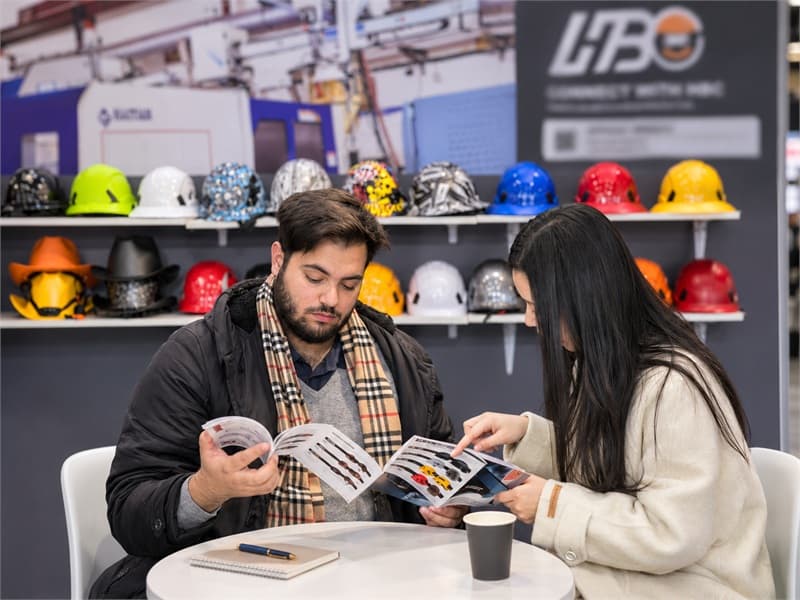
Buyer tip: Before comparing prices, give each supplier the same bill of materials, required standard, quantity, packaging and delivery term. Two quotations are not comparable if one includes a visor and earmuffs while the other covers only the helmet.
3. Can HBC Customize the Logo and Packaging?
Many distributors and private-label buyers asked about colored logos, special shell colors, reflective strips and branded packaging. These options may be available, but the correct process starts with the exact model, order quantity, logo artwork and target market.
Logo location and method must suit the helmet surface and controlled product configuration. Packaging also needs to account for attached or separately packed accessories, carton dimensions and the buyer’s retail or project-delivery requirements.
For practical evaluation, HBC can prepare a logo layout or sample proposal before mass production. Any change that could affect a tested construction must be reviewed against the model’s approved technical documentation.
What Hands-On Evaluation Revealed
SF-06B, SF-06I, SF-10B-04 and SF-71 were the models most often handled, tried on or followed by requests for documents and samples. Buyers did not evaluate them on appearance alone.
They checked how the fit could be adjusted, whether the helmet remained stable, what accessory interfaces were available and whether the complete configuration suited their sales market or project. Handling the product also prompted more precise questions about which components were standard and which were optional.
This is one reason a sample can be more useful than another round of photographs. A buyer can verify fit, finish, adjustment, accessory compatibility and marking before approving a larger order.
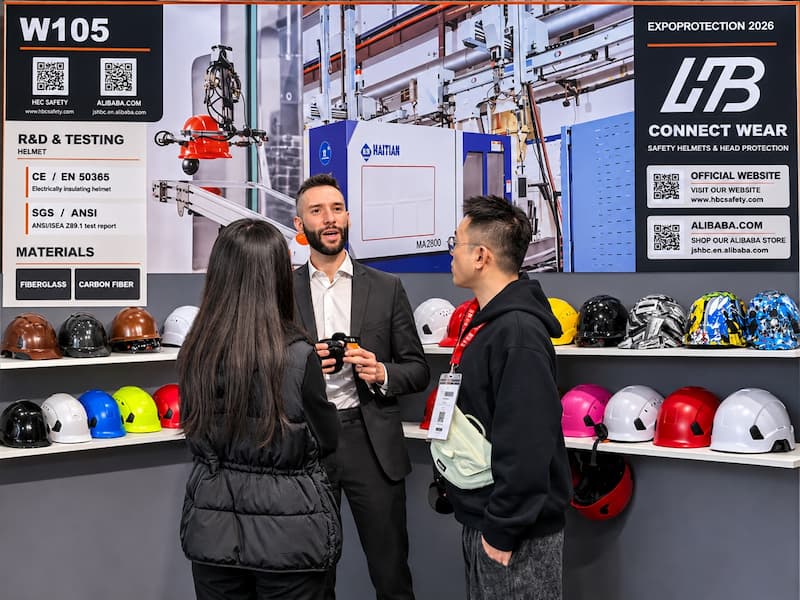
Hands-on evaluation often turned a general price inquiry into a more accurate configuration discussion.
Field Experience: Why an SF-06B Quote Needs More Than a Unit Price
One recurring SF-06B purchasing pattern began with tiered pricing and MOQ. A West African PPE buyer wanted to understand whether HBC could support a small trial as well as larger repeat quantities.
The discussion quickly expanded. Was the headlamp included? Could the inner goggles, outer visor and earmuffs be combined with the helmet? Could the helmet or lenses be purchased separately? Which compliance documents applied, and what information was available for freight planning?
Instead of replying with one price, HBC organized the evaluation around the requested configuration. We supplied a specification sheet, model-relevant compliance files, product photographs, accessory details and packing data. For customization, the next steps included logo artwork, color confirmation and sample approval.
The practical lesson is straightforward: a helmet quotation is only useful when the configuration is defined. Before approving an SF-06B order, confirm these five points:
- Which helmet components and accessories are included?
- Do the certificate, test report and Declaration of Conformity match the exact model and configuration?
- Will the logo, color, reflective treatment or packaging change the MOQ, price or lead time?
- Is the freight estimate based on confirmed carton quantity, dimensions, gross weight and trade terms?
- Should a helmet-only sample or a complete accessory set be evaluated first?
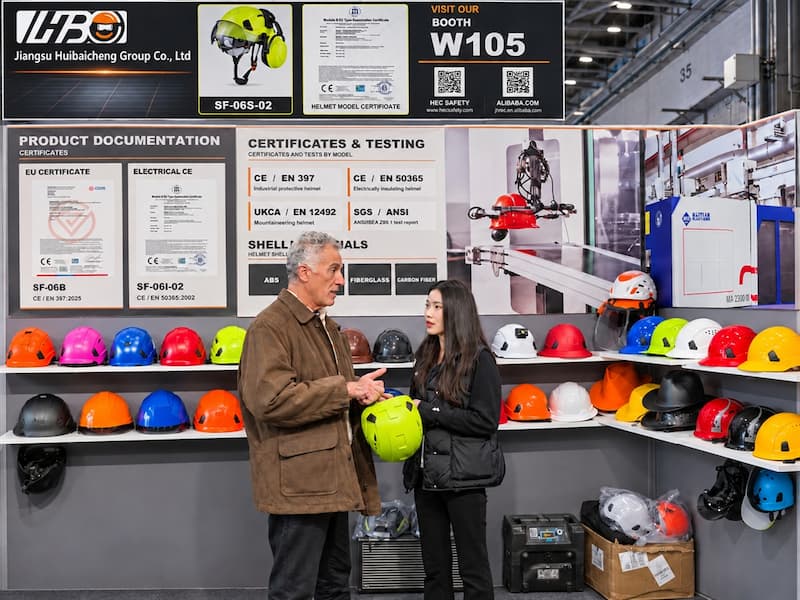
This example reflects questions heard at the show and in related follow-up discussions. Customer identities and individual commercial terms remain confidential.
What We Learned from Buyer Conversations in Paris
Three purchasing priorities stood out.
First, certification comes before product promotion. Buyers want model-level evidence and the correct standard edition, not a broad statement that a supplier offers certified helmets.
Second, commercial terms depend on the configuration. MOQ and price become meaningful only after the buyer defines accessories, customization, packaging and destination.
Third, samples connect documents with the physical product. A sample helps the buyer verify fit, markings, accessory interfaces and finish before a bulk commitment.
These are observations from conversations at our booth, not claims about every European PPE buyer. They are nevertheless useful for any distributor or project purchaser preparing a helmet inquiry.
How HBC Is Following Up After the Show
After Expoprotection 2026, HBC began sending booth photographs to help contacts review the products discussed in Paris. We are also providing product catalogues, configuration-based quotations and model-matched certification documents according to each inquiry.
Where a buyer needs physical verification, the next step is a helmet-only or complete-set sample. Follow-up packs for SF-06B, SF-06I, SF-10B-04 and SF-71 are kept separate so documents from different standards and configurations are not mixed.
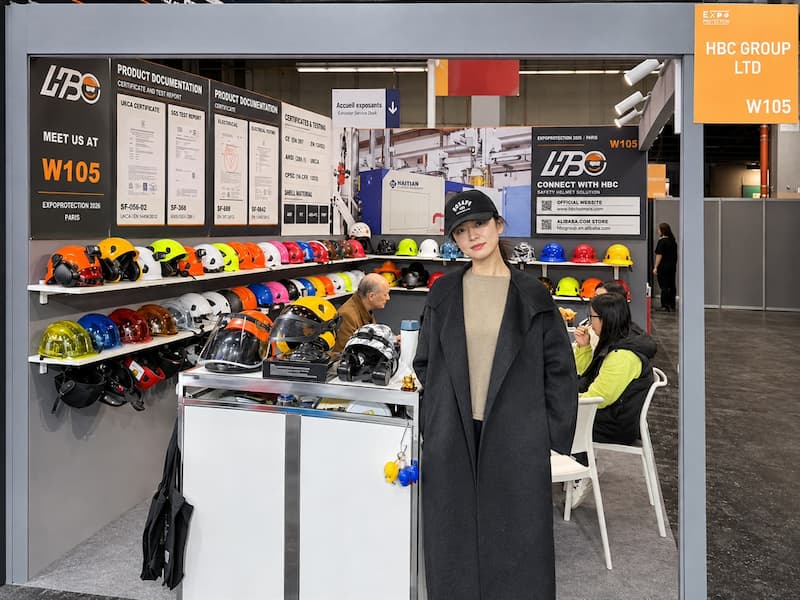
Thank you to the distributors, importers and project buyers who met HBC in Paris.
Planning a Safety Helmet Inquiry?
To receive a more accurate recommendation and quotation, send HBC your target market, required standard, model or application, expected quantity, accessory list, logo and packaging requirements, delivery destination and sample needs.
You can review HBC’s industrial safety helmet range, see the SF-71 industrial bump cap or contact the HBC team to request model-level documents, a quotation or samples.
Source note: Event dates and venue are based on the official Expoprotection 2026 practical information. Product and certification statements are based on HBC’s verified model documentation as reviewed on November 17, 2026. Buyers should reconfirm the exact model, configuration and current documents before placing an order.