
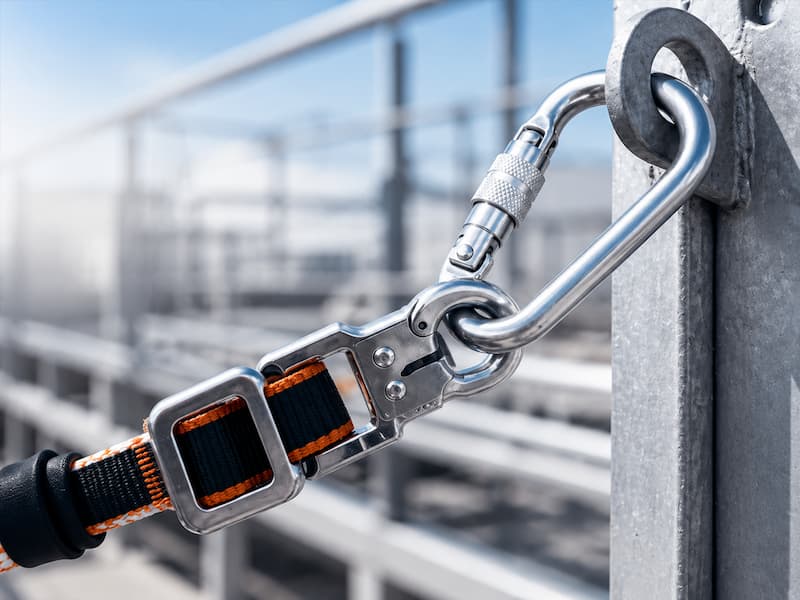
In many industries, working at height is part of daily operations. Construction workers, roof installers, utility teams, tower maintenance crews, rescue workers, and industrial technicians often need reliable fall protection equipment to complete their jobs safely. Among all fall protection products, the safety rope is one of the most widely used and important items.
For overseas buyers, importers, wholesalers, and safety equipment distributors, choosing the right safety rope is not only about finding a competitive price. The product must match real working environments, meet customer expectations, offer stable performance, and support long-term business needs. A poor-quality rope may cause serious safety risks, while a well-made rope can help build trust with contractors, industrial users, and professional safety buyers.
This guide explains the key factors to consider when sourcing safety ropes for international markets.
1. Understand the Main Use of Safety Rope
A safety rope is mainly used to protect workers from falling or to support controlled movement during work at height. It is commonly used together with safety harnesses, lanyards, hooks, fall arresters, lifelines, and anchor points. Depending on the job site, the rope may be used for fall arrest, positioning, restraint, rescue, climbing support, or temporary access.
In construction projects, safety ropes are often used for scaffolding, roofing, steel structure work, and building maintenance. In utility and power industries, workers may need ropes for pole climbing, tower work, and equipment installation. In rescue and emergency applications, ropes are used for lifting, lowering, and securing people or equipment. In factories, warehouses, and shipyards, safety ropes may also be used during inspection, repair, or confined-area operations.
For wholesalers, it is important to understand the customer’s working environment before choosing a model. A general-purpose safety rope may be suitable for simple positioning work, while more demanding applications may require higher strength, better abrasion resistance, or specific certifications. When the product is matched correctly to the application, it becomes easier to sell and easier for end users to trust.
2. Choose the Right Material and Structure
Material is one of the most important factors in safety rope performance. Common materials include polyester, polyamide, polypropylene, and high-strength synthetic fibers. Each material has different advantages.
Polyester safety rope is widely used because it has good strength, low stretch, and strong resistance to UV exposure and moisture. It is suitable for many outdoor and industrial environments. Polyamide, also known as nylon, usually has better elasticity, which can help absorb energy, but it may absorb more water than polyester. Polypropylene is lightweight and economical, but it may not be suitable for all professional fall protection applications. For special markets, high-performance fibers may be used where extra strength or heat resistance is required.
The rope structure also matters. Twisted rope is traditional, flexible, and often cost-effective. Braided rope usually offers a smoother surface, better handling, and more stable performance. Kernmantle rope, with an inner core and outer sheath, is commonly used in climbing, rescue, and professional height safety applications because the core provides strength while the outer sheath protects against abrasion.
For importers and distributors, the right material and structure should match the target customer group. Price-sensitive markets may prefer economical twisted rope, while professional contractors and industrial safety users may look for braided or kernmantle ropes with reliable test data and better handling.
3. Check Strength, Diameter, and Length
When sourcing safety rope, buyers should pay close attention to strength, diameter, and length. These three specifications directly affect product performance and user experience.
Breaking strength is a key technical value. It shows the maximum force the rope can handle under test conditions. However, buyers should remember that real working conditions are different from laboratory tests. Sharp edges, knots, wear, chemical exposure, and incorrect use can reduce rope strength. For this reason, professional users often require safety factors and clear product instructions.
Diameter affects both strength and handling. Thicker ropes may offer higher strength and better durability, but they can also be heavier and less flexible. Thinner ropes are easier to carry and operate, but they must still meet the required safety performance. Common diameters vary depending on the application and local market demand.
Length is another practical detail. Safety ropes may be supplied in fixed lengths such as 10 meters, 20 meters, 30 meters, or 50 meters, or in rolls for cutting and customization. For wholesalers, offering several standard lengths can help serve different customers more efficiently. Some buyers may also request customized lengths with hooks, loops, thimbles, or sewn terminations.
A clear specification sheet can help overseas buyers compare products and communicate with customers more professionally.
4. Focus on Durability and Worksite Conditions
A safety rope must perform in real job site conditions, not just look good in a catalog. Workers may use the rope outdoors under strong sunlight, in dusty construction zones, near concrete edges, around metal structures, or in wet and dirty environments. These conditions can affect rope life and safety.
Abrasion resistance is especially important. Ropes may rub against scaffolding, roof edges, beams, or equipment. If the outer surface wears quickly, the rope becomes unsafe and must be replaced. UV resistance is also important for outdoor work, especially in regions with strong sunlight. Moisture resistance matters for marine, rainy, or humid environments.
Chemical exposure should also be considered. Some workplaces may involve oil, solvents, acids, alkalis, paint, or cleaning chemicals. Not all rope materials can resist these substances. Buyers should ask suppliers about material performance and recommended usage limitations.
Good stitching, strong terminations, clean rope ends, and quality accessories can also improve durability. For example, reinforced loops, metal thimbles, heat-sealed ends, and protective sleeves can help extend product life. For wholesale buyers, these small details can reduce complaints and improve repeat orders.
5. Confirm Standards, Testing, and Documentation
Safety rope is a protective product, so standards and testing are very important. Different countries and industries may have different requirements for fall protection equipment. Buyers should confirm the target market’s regulations before placing large orders.
Customers in Europe may ask for EN-related fall protection standards, while buyers in North America may require ANSI or OSHA-related compliance depending on the product type and application. Other regions may follow local safety rules or project-specific requirements. Even when certification is not mandatory for all sales channels, professional buyers often prefer products with reliable test reports and clear technical documents.
Importers should ask suppliers for product specifications, test reports, certificates, user instructions, labels, and packaging information. The rope should be clearly marked with key details such as material, diameter, length, production batch, and safety information where required.
Documentation helps buyers build confidence. It also makes it easier to sell to contractors, government projects, industrial customers, and distributors who need traceable quality. For private label orders, buyers should also confirm whether the supplier can provide customized labels, manuals, and packaging according to local market requirements.
6. Consider Customization and Supplier Reliability
Safety rope can be customized in many ways to meet different market needs. Common customization options include rope color, diameter, length, packaging, logo label, hooks, connectors, sewn loops, protective sleeves, and complete fall protection sets. Some buyers may order safety ropes as single products, while others may prefer combination kits with safety harnesses, lanyards, and carabiners.
Color customization can help with branding, team identification, or product classification. Bright colors such as yellow, orange, green, blue, and red are often popular because they are easy to see on job sites. Customized packaging can also make the product more suitable for retail, online sales, or project supply.
Supplier reliability is just as important as product design. A dependable manufacturer should offer stable production capacity, consistent material quality, clear communication, and strict inspection before shipment. For bulk orders, buyers should confirm sample quality, lead time, minimum order quantity, payment terms, and shipping support.
A strong supplier can also help buyers develop different product levels, such as basic models for general use, standard models for construction markets, and higher-end models for professional height safety applications. This flexibility helps wholesalers serve more customers and build a stronger product line.
Conclusion
A safety rope is a key product in fall protection and work-at-height safety. For overseas buyers, importers, and wholesalers, selecting the right rope requires attention to application, material, structure, strength, durability, standards, customization, and supplier capability.
The best safety rope is not simply the cheapest option. It should match the working environment, provide reliable performance, and meet the expectations of professional users. By choosing the right product and working with a reliable manufacturer, buyers can reduce purchasing risks, improve customer satisfaction, and build long-term value in the global safety equipment market.